

In our Yazh Academy, we offer Mrithangam classes, a traditional South Indian percussion instrument. Our expert teachers provide comprehensive instruction in playing techniques, rhythmic patterns, and compositions. Students learn to develop finger control, hand coordination, and a deep understanding of rhythmic structures (tala). We emphasize the importance of maintaining proper posture and tone production on the Mrithangam. Through individual and group lessons, we strive to cultivate a solid foundation in this ancient art form, encouraging students to explore improvisation and accompany other musicians. Our goal is to foster a deep appreciation for the rich cultural heritage and versatility of the Mrithangam.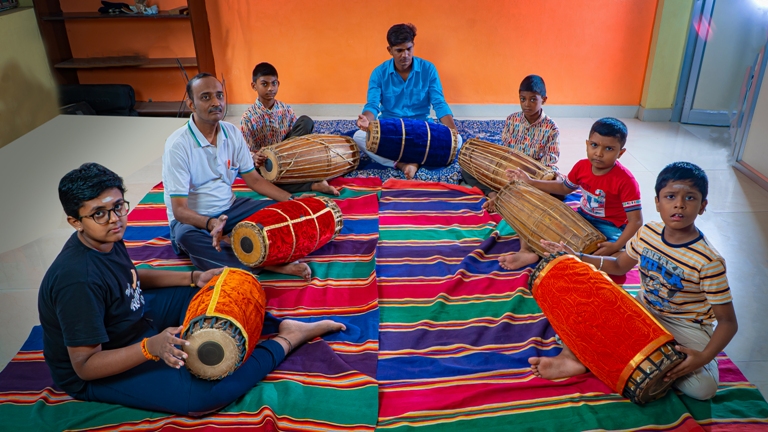
About Mrithangam
The mridangam (also spelled “mrithangam” or “mridang”) is a traditional Indian percussion instrument, primarily used in Carnatic music, the classical music of South India. Here’s an overview:
1. Structure & Materials: The mridangam is a double-sided drum made primarily from a hollowed piece of jackfruit wood. Each end is covered with a skin (usually from goatskin), and the two sides produce different tones.
2. Tuning: The pitch of the mridangam can be adjusted. This is typically done by adjusting leather straps that run the length of the drum’s body. A mixture of semolina (or rava) and water is also applied to the center of the larger skin, which lowers the pitch and gives the mridangam its distinctive bass sound.
3. Playing Technique: The mridangam is played with both hands. The bass tone is produced on the larger side, while the sharper tone comes from the smaller side. Different rhythmic patterns and intricate finger techniques contribute to its complex sound.
4. Role in Music: In a Carnatic music ensemble, the mridangam provides rhythmic support, complementing the melody provided by instruments like the violin or veena and the vocals. It’s vital for keeping the tala, or rhythmic cycle.
5. Cultural Significance: The mridangam isn’t just an instrument—it’s deeply embedded in South Indian culture. It’s often played during religious ceremonies and is considered a divine instrument in Hindu tradition.
6. Famous Mridangam Players: A few legendary mridangists include Palghat Mani Iyer, Umayalpuram K. Sivaraman, and Guru Karaikudi R. Mani.
7. Learning Curve: Mastery of the mridangam requires years of dedicated training. Students typically begin learning from a young age under the guidance of a guru (teacher).
The mridangam’s deep, resonant tones and its intricate rhythmic patterns make it an essential and revered instrument in the rich tapestry of South Indian classical music.